Brain Injury Lawyer Denver for Seniors Suffering Traumatic Brain Injuries
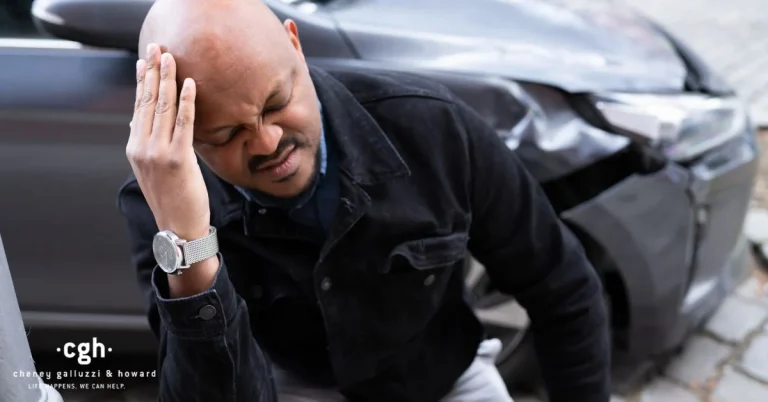
A traumatic brain injury in an older adult rarely looks simple. The fall may happen in a grocery store aisle, on an icy apartment walkway, in a nursing facility bathroom, or after a crash at a busy Denver intersection. What follows is often far more serious than families expect. A senior who seemed alert in the emergency room can decline over the next day. A retiree who lived independently can suddenly need help with bathing, meals, medications, transportation, and memory cues. A spouse in their seventies may become a full-time caregiver overnight.
That is why claims involving older adults deserve close attention from the beginning. A case involving a younger worker often focuses on lost wages and future earning capacity. A case involving a senior requires a different lens. The key losses may include diminished independence, the cost of skilled care, added pressure on family caregivers, a move from home to assisted living, and a sharp decline in quality of life. A Brain Injury Lawyer Denver families trust should understand those differences and build the case around them, not treat an elderly client like a younger accident victim with a different birthdate.
Why brain injuries in seniors are often underestimated
In practice, families are commonly told some version of the same thing: “It was only a fall,” or “The scan did not show much,” or “At that age, recovery is slower anyway.” Those statements can blur the real issue. Older adults are more vulnerable to serious complications after head trauma, even when the original event looked minor. Balance problems, blood thinners, reduced reserve, and preexisting cognitive issues can make a modest blow to the head far more dangerous.
A daughter may notice that her father is repeating himself more than usual after falling in a parking lot. A husband may see that his wife, who managed the bills for years, can no longer follow a simple bank statement after hitting her head in a rear-end collision. The defense side often tries to write these changes off as ordinary aging. A strong legal case separates the before from the after with care, detail, and credible evidence.
That evidence does not come from one dramatic moment. It usually comes from the full picture: emergency records, follow-up neurology visits, therapy notes, medication changes, testimony from relatives, photographs of hazards, incident reports, and practical proof of how daily life changed. Small facts matter. Did the injured senior stop cooking because they forgot burners were on? Did they give up church because stairs became frightening? Did they lose the ability to drive to medical appointments? Those details turn an abstract injury into a documented human loss.
The accidents that most often lead to senior brain injury claims
In Denver, as in most cities with changing weather, uneven surfaces, traffic, and a growing older population, traumatic brain injuries in seniors often arise from ordinary settings rather than spectacular disasters. A patch of untreated ice on a business entrance can be enough. So can a poorly lit hallway in a residential complex. Medication rounds in a care facility, transfers from bed to wheelchair, and missed fall precautions also appear often in cases involving elderly residents.
Motor vehicle collisions remain a major source of serious injury. An older adult may be driving less often than they once did, but when a crash occurs, the physical consequences can be severe. The body does not absorb impact the same way at seventy-eight as it does at thirty-eight. Even when a senior walks away from a collision, the head injury can emerge more clearly in the days that follow.
Premises liability claims are common too. These are cases where a property owner, business operator, landlord, or facility may have failed to maintain reasonably safe conditions. In senior cases, the defense sometimes argues that the injured person simply “was not steady” or “should have been more careful.” That line of argument is predictable. It also misses the point when a preventable hazard existed and caused a serious fall.
Nursing home and assisted living claims require special scrutiny. Not every fall in a facility means negligence occurred. Seniors can fall even with attentive care. But some cases involve missed care plans, understaffing, delayed response times, broken bed alarms, failure to supervise transfers, or a pattern of ignored safety complaints. In those cases, the injury is not just unfortunate, it may have been preventable.
What makes a senior brain injury case legally and medically different
Older clients are often harmed twice, once by the accident and again by the assumptions that follow. Insurance adjusters may quietly discount the case because the person is retired. They may imply that the injured senior had “limited life expectancy” or “preexisting decline” and therefore suffered less compensable harm. That reasoning is not just cold, it is legally and factually weak when the evidence shows a meaningful loss.
Retirement does not reduce the value of a person’s independence. A seventy-five-year-old who gardens, volunteers, cooks, drives, babysits grandchildren, and manages a household has a rich and measurable life. If a brain injury destroys those abilities, the damage is profound. The law does not reserve full compensation for people with office jobs. The real question is what was taken from this person.
Medical complexity is another major factor. Many seniors have prior diagnoses such as mild cognitive impairment, prior stroke history, diabetes, vision limitations, or heart disease. None of that prevents a valid claim. It does mean the legal team must work harder to show the change caused by the incident. A careful lawyer will gather records from before the injury, compare function over time, and work with treating physicians when appropriate to explain what changed and why.
Timing matters too. Families often wait because they are focused on treatment, which is understandable. But evidence can fade quickly. Surveillance footage is erased. Witnesses forget details. A hazardous surface gets repaired. Facility staff move on. Early investigation can preserve facts that become impossible to reconstruct later.
The first weeks after the injury often shape the entire case
A lot can be won or lost in the first month. Not because a lawsuit must be filed immediately, but because the factual record begins forming right away. If the injured senior says “I’m fine” at the scene, that statement may appear later in an insurer’s file as if it settles the issue. If no one photographs the broken handrail, loose rug, or icy step, the defense may later suggest there was no problem at all. If the family does not mention confusion, headaches, dizziness, personality change, or sleep disruption to doctors, those symptoms may look less serious on paper than they truly were.
Families should not feel they need to build a legal case alone while also handling medical emergencies. Still, there are a few practical steps that can make a real difference:
- Get prompt medical evaluation and keep follow-up appointments, especially when symptoms change or worsen.
- Preserve photographs, incident reports, names of witnesses, and any communication with a property owner, driver, or facility.
- Keep a simple journal of daily changes in memory, mood, mobility, sleep, pain, and independence.
- Avoid giving recorded statements to insurers before understanding the injury and its likely course.
- Speak with a lawyer early enough to protect evidence and evaluate deadlines.
That last point matters more than many people realize. Colorado claims can involve different notice requirements and filing deadlines depending on the defendant and the setting. A claim against a private business is not handled the same way as a claim that may involve a public entity. Families should get case-specific advice rather than assume they have plenty of time.
How a Brain Injury Lawyer Denver families hire should evaluate the case
Not every personal injury lawyer is equipped for a senior traumatic brain injury case. These claims require patience, medical literacy, and the discipline to build damages beyond wage loss. When I look at what separates effective representation from average representation, it usually comes down to the lawyer’s ability to tell the client’s real story through evidence.
That starts with liability, the question of who caused the injury. Was the crash caused by a distracted driver? Did a store ignore a recurring spill? Did an apartment complex fail to clear ice after a storm? Did a facility skip fall precautions for a resident known to be at risk? The facts have to be developed aggressively and early.
Then comes causation, often the hardest fight in a brain injury case involving an older adult. The defense will ask whether confusion, headaches, mobility decline, or memory problems were already present. Sometimes there were mild preexisting issues. Good lawyering does not hide that. It addresses it directly. Many seniors are functioning quite well despite age-related conditions, until one event changes everything. The task is to prove the difference in a way that is credible, documented, and hard to dismiss.
Damages must also be framed correctly. If the lawyer talks only about emergency bills and a few follow-up appointments, the case will be undervalued. A proper analysis may include future neurology care, cognitive therapy, occupational therapy, mental health treatment, home health support, transportation costs, home modifications, respite care for family, and the cost difference between independent living and assisted living if the injury forced a move.
A seasoned Brain Injury Lawyer Denver residents consult should also be realistic. Some cases have clear liability and difficult medical proof. Others have powerful medical evidence but disputed fault. Sometimes the legal issue is not whether the injury happened, but how much of the present condition the incident actually caused. Straight talk matters. Families deserve to know where the case is strong, where it is vulnerable, and what can be done to improve the record.
Insurance companies often discount elder injury claims, and that is a mistake
There is an old bias in personal injury valuation that still shows up too often. If the injured person is retired, the claim is somehow smaller. That view ignores how seniors actually live. Many older adults contribute enormous unpaid value to their households and families. They care for spouses, provide childcare, volunteer, manage finances, cook, drive, organize medical appointments, maintain homes, and keep families functioning. A brain injury can wipe out those contributions in a matter of seconds.
I remember a case pattern that appears often, even if the names and facts differ. An elderly woman falls because a walkway was left slick after thaw and refreeze. At first the insurer sees a modest claim. She is retired, they reason. Then the fuller story comes out. Before the fall, she lived alone, drove to her own appointments, attended community events twice a week, and cooked every meal. After the head injury, she became fearful, disoriented, and unable to manage medications. Her son started missing work to check on her. Within months, the family was paying for help and discussing assisted living. The claim was never about a single emergency room bill. It was about the collapse of an entire way of life.
Jurors tend to understand this when the evidence is presented honestly. They know that independence has value. They know that losing memory, confidence, and self-direction at eighty can be every bit as devastating as losing a paycheck at forty.
The role of family witnesses can make or break the claim
Family testimony is often central in these cases, not because it replaces medical evidence, but because it gives the medical evidence context. Doctors may see a patient for fifteen minutes. A spouse sees what happens at 2:00 a.m. When headaches wake the injured person from sleep. An adult child notices that a parent now tells the same story six times in one dinner. A granddaughter sees that the once-patient grandfather now becomes agitated over a television remote.
These observations need to be concrete. “She is not the same” is heartfelt but vague. “She used to handle her weekly pill organizer without help, and since the fall she mis-sorts medications unless someone sits with her” is far more useful. The strongest cases often include a mosaic of practical examples that are hard to argue away.
Lawyers should help families document these changes without coaching them into exaggeration. Overstatement hurts credibility. Precision helps it. If balance is worse only at night, say that. If confusion fluctuates, say that. If memory improved somewhat after therapy but never returned to baseline, that nuance matters. Real cases are rarely neat. Honest complexity often makes testimony more persuasive, not less.
When nursing homes and assisted living facilities are involved
Facility cases can be emotionally charged. Families often feel guilt, anger, and confusion all at once. They entrusted a loved one to people who were supposed to provide safe care. A serious head injury can make that trust feel shattered.
Still, these cases need disciplined analysis. Elderly residents can fall even in good facilities. A lawyer has to determine whether the event was truly unavoidable or whether warning signs were missed. Was the resident assessed as a fall risk? Were interventions ordered? Were those interventions followed? Was there enough staff available for transfers? Did prior falls occur? Was the family informed? Were there delays in sending the resident for evaluation after a head strike?
Records often tell an important story, but they are not always the whole story. Staffing patterns, witness accounts, prior complaints, and training practices can matter as much as the chart. Families should also pay attention to what happened after the fall. A delay in recognizing a head injury can worsen the outcome. In seniors, especially those on anticoagulants, that delay can be critical.
Settlement or trial depends on evidence, timing, and credibility
Most injury claims resolve without a trial, but brain injury cases involving seniors can be stubborn. Insurers may dispute the extent of cognitive harm or insist the decline was simply age related. They may offer money for the immediate bills while resisting compensation for future care and lost independence. Whether to settle or litigate depends on many variables, including the strength of liability, the quality of medical support, the client’s goals, and the defense posture.
A fair settlement can spare an elderly client the burden of prolonged litigation. That has real value. On the other hand, settling too early is a common mistake. Brain injury symptoms may evolve over months. Functional losses become clearer with time. Future care needs may not be obvious right after discharge. A lawyer should balance the need for timely resolution against cghlawfirm.com Brain Injury Lawyer Denver the risk of undervaluing a still-developing injury.
There is no universally “right” timetable. In some cases, waiting allows a more accurate valuation. In others, delay adds stress without improving the proof. Judgment matters here. So does communication with the family about what the process is likely to involve.
Choosing counsel with the right fit for an older client
The best legal strategy in the world can still fail if the lawyer cannot communicate well with the client and family. Seniors dealing with head injuries may fatigue easily, lose focus during long meetings, or become overwhelmed by paperwork. Good representation adjusts to that reality. Meetings may need to be shorter. Explanations should be clear, not rushed. Family involvement should be welcomed while preserving the client’s dignity and legal rights.
When families are evaluating counsel, they should look for a few practical qualities:
- Experience with traumatic brain injury cases, not just general accident claims.
- Comfort handling claims where damages center on independence and care needs rather than wage loss.
- A clear plan for gathering records, witness statements, and evidence early.
- Willingness to explain risks, weaknesses, and likely timelines in plain English.
- Respectful communication with older clients and the relatives supporting them.
That combination is more important than flashy marketing. Brain injury litigation is detail work. It rewards preparation, patience, and credibility.
What a fair recovery is really meant to address
Money does not restore a damaged brain. Families know that better than anyone. The purpose of a legal recovery is more practical. It can fund therapy, in-home care, transportation, safety modifications, respite care, and the higher cost of long-term support. It can also recognize pain, fear, humiliation, lost enjoyment of life, and the erosion of self-sufficiency that often follows a serious brain injury.
For seniors, that last point carries unusual weight. Independence is not a sentimental extra. It is often the center of identity. The ability to wake in one’s own home, prepare breakfast, keep track of appointments, choose when to go out, read, pray, visit friends, and manage personal routines is a form of freedom. When negligence takes that away, the law should see the loss clearly.
Families in Denver dealing with this kind of injury need more than generic injury representation. They need counsel who understands how an older brain injury case is built, how insurers try to minimize it, and how to prove the full human cost with honesty and force. A skilled Brain Injury Lawyer Denver seniors and their families can rely on will not reduce the claim to a stack of bills. The work is to show who this person was before the injury, what changed after it, and what it will take to support them with dignity going forward.
CGH Injury Lawyers
Address: 2701 Lawrence St Ste 201, Denver, CO 80205
Phone number: +17206698062
FAQ About Brain Injury Lawyer Denver
What to avoid after brain injury?
After a brain injury (such as a concussion or traumatic brain injury), protecting your brain from physical, mental, and chemical stress is critical to proper healing.
What is a brain injury lawyer?
A brain injury lawyer (or Traumatic Brain Injury / TBI lawyer) is a personal injury attorney who represents individuals who have suffered concussions, contusions, hemorrhages, or other forms of brain trauma caused by someone else's negligence, recklessness, or intentional harm.
Can traumatic brain injury be cured?
A traumatic brain injury (TBI) cannot be strictly "cured" in the sense of reversing permanent cell death or restoring the brain to its exact pre-injury state. However, the brain possesses a remarkable ability to heal and adapt.